| IMO | 5345065 |
|---|---|
| Gross tonnage | 1,105 GT |
| Length | 57.0 m |
| Builder | Pullman Company |
| Launched | 1943 |
| Maiden voyage | 1947 |
| Class | PCE-842-class patrol craft |
| Status | Active |
| All names | Sunnhordland; Brahe; Kristina Brahe; HMS Kilchrenan; USS PCE-830 |
Overview
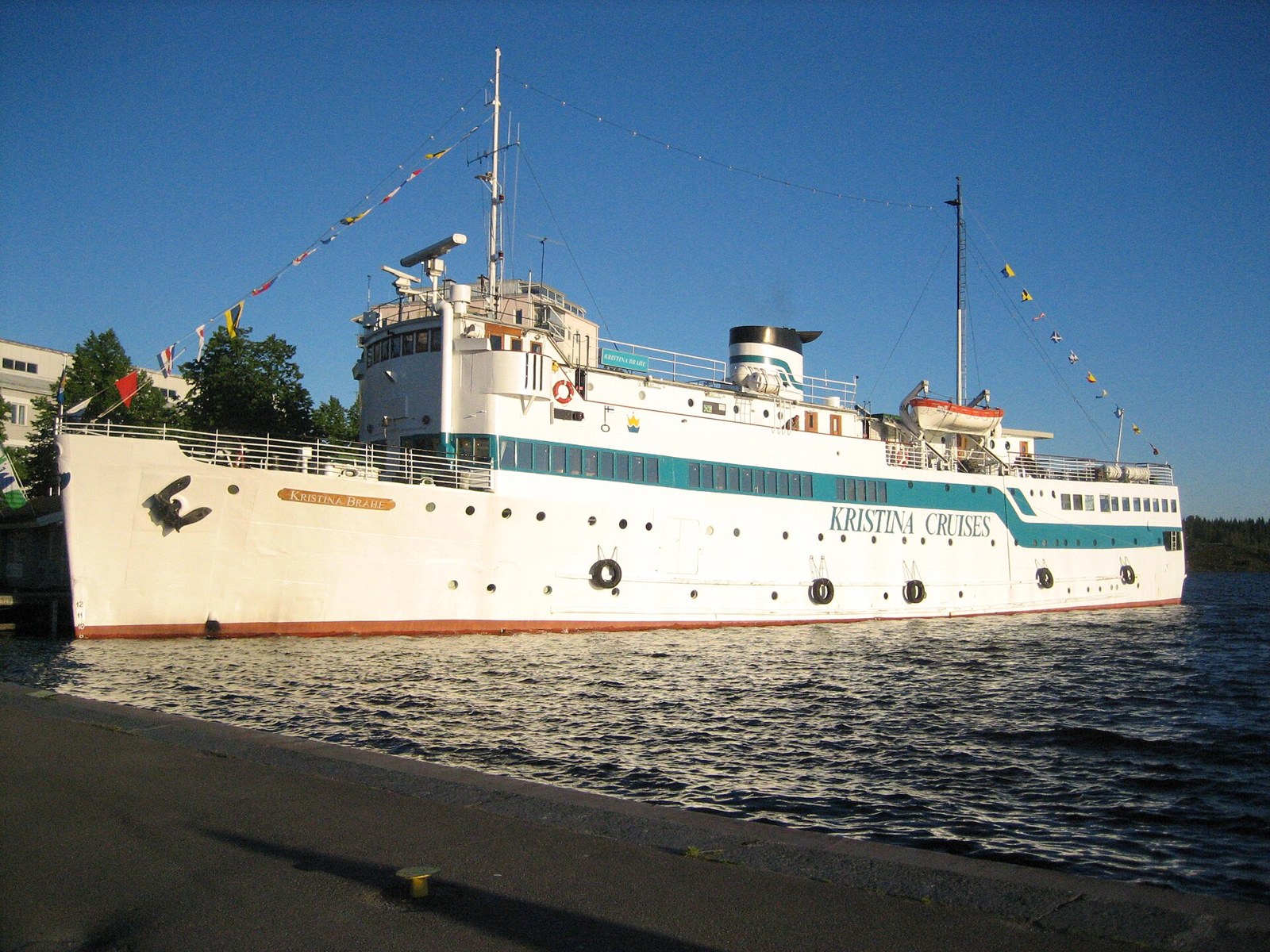
The ship the dataset calls Brahe is the oldest hull in this batch by a generation, and she did not begin life as a cruise ship at all. She was built in Chicago in 1943 as USS PCE-830, a Patrol Craft Escort of the United States Navy, transferred on completion to the Royal Navy as HMS Kilchrenan, and spent the Second World War on convoy and patrol work from Gibraltar along the West African coast. Sold to Norway in 1947 and rebuilt as a passenger ship named Sunnhordland, she has carried passengers ever since — in western Norway, then for nearly four decades in Finland as Kristina Brahe, then briefly as Brahe, and since 2015 back in Norway under her first civilian name.
She is also the ship on which the dataset is most seriously out of date, and this guide follows the sourced facts: her launch was in 1943, not 2010, and her current name is not Brahe. The discrepancies are logged in the batch notes. What survives every correction is the remarkable fact itself — a wartime patrol craft, built for a planned life of a few years, still in passenger service more than eighty years later.
Key specifications
The dataset records 1,105 tons, a length of 57.0 m, and no beam, speed or capacity figures. Her own article gives two sets of characteristics, and it matters which is used. As a PCE she displaced 640 long tons, measured 55.02 m by 10 m, and made 15 knots on two General Motors diesel engines of 1,800 bhp each. As a cruise ship she is measured at 1,105 gross register tons — GRT, the pre-1969 tonnage measure, not modern GT — 56.8 m long, 10.08 m in beam, with a draught of 3.3 m, four decks, 45 passenger cabins and a crew of 18, powered by two Caterpillar engines of 1,275 kW giving about 12 knots cruising and 14 knots maximum. The cruise-ship figures are the ones that describe the vessel a passenger boards.
Design and construction
PCE-830 was built by the Pullman-Standard Car Company of Chicago, Illinois — a railway-car builder turned to wartime shipbuilding on the Great Lakes — as one of the PCE-842 class of patrol craft escorts, a 173-foot (in naval measure) anti-submarine escort design produced in numbers for the US Navy and its allies. She was laid down on 24 December 1942. As built she carried a 3-inch gun, 40 mm and 20 mm anti-aircraft guns, depth-charge tracks and projectors and Hedgehog anti-submarine mortars, with a complement of about 100.
Her peacetime design history is a conversion, not a construction. Bought by the Norwegian Hardanger Sunnhordlandske Dampskipsselskap (HSD) in 1947, the escort was rebuilt as a small passenger ship for the fjord and coastal services of western Norway — naval fittings landed, passenger accommodation and public rooms built into and above the hull. Later Finnish ownership rebuilt her again for cruising, and it is that layered ship — naval hull, Norwegian ferry conversion, Finnish cruise fit-out — that survives today.
Naming, launch and maiden voyage
She was launched on 13 June 1943 and commissioned on 31 August 1943 as HMS Kilchrenan, having been transferred to the Royal Navy that August under Lend-Lease arrangements; her American designation, PCE-830, was never an operating name in US service. The dataset's "launched 2010" and "maiden voyage 1943" invert the real record: 1943 is the launch and commissioning year, and 2010 is simply the year she was renamed Brahe. The correction is logged in the batch notes.
Her civilian names mark her owners. Sunnhordland (1947) named her for the district of the Norwegian coast she served. Kristina Brahe (1974) gave her a Finnish-Swedish historical name in the style of her Kotka owners, Kristina Cruises. Brahe (2010) was the shortened form her Lake Saimaa operator used. In 2015 she reverted to Sunnhordland.
Career by operator
| Period | Name | Operator | Notes |
|---|---|---|---|
| 1943–1946 | HMS Kilchrenan (ex-USS PCE-830) | Royal Navy | Gibraltar-based convoy and patrol service, West African coast |
| 1947–1974 | Sunnhordland | Hardanger Sunnhordlandske Dampskipsselskap (HSD) | Rebuilt as a passenger ship for western Norway |
| 1974–2010 | Kristina Brahe | Kristina Cruises, Kotka | Short cruises in the Baltic Sea and on Lake Saimaa |
| 2010–2015 | Brahe | Saimaan Matkaverkko Ltd | Name shortened on sale, August 2010 |
| 2015–present | Sunnhordland | Norwegian operation (operator not named in sources used) | Returned to western Norway; name restored |
Her war service was spent based at Gibraltar, patrolling off West Africa and escorting convoys. Returned to US Navy custody in December 1946 and struck from the Naval Vessel Register in 1947, she was sold to HSD the same year. In Finland from 1974 she became a fixture of Baltic and Lake Saimaa cruising under Kristina Cruises — small, characterful and marketed partly on her naval past, including festival cruises to the Savonlinna opera season. Sold in August 2010 to Saimaan Matkaverkko Ltd and renamed Brahe, she stayed on the lake trade until a further sale in 2015 took her home to western Norway.
Onboard character
Brahe's onboard character was always that of a small vintage ship: 45 cabins on four decks, a crew of 18, and the intimate scale of a vessel a twentieth the size of a modern Baltic ferry. Under Kristina Cruises she was sold as an expedition-style classic — comfortable rather than luxurious, with her wartime origin treated as heritage rather than hidden. Her Finnish programme of short Baltic cruises and Saimaa lake voyages, timed in summer to events such as the Savonlinna Opera Festival, suited a ship whose appeal is her history and her size: she can use the Saimaa canal system and small harbours closed to larger tonnage.
Major refits and incidents
The defining refits are her conversions: the 1947 rebuild from escort to passenger ship in Norway, and her Finnish rebuilding for cruise service after 1974, with further renovation over her long Kristina career; the sources used do not itemise the later work, and a claimed schedule of refits would be. No casualty is recorded in her article across either her naval or her commercial career — a notable record for a ship that spent 1943–45 on Atlantic convoy routes, though her article's war history is brief and this guide makes no claim beyond it.
Sister ships and class
As a PCE-842-class patrol craft she had dozens of sisters, built at several American yards for the US, British and other navies; almost all were scrapped in the decades after 1945, and her survival in passenger service is exceptional within the class. As a cruise ship she is a one-off conversion with no sister. Her Finnish fleetmates under Kristina Cruises — Kristina Regina and Kristina Katarina — were companions in service only, unrelated hulls.
Fate and where she is now
The dataset carries her as active under the name Brahe for Saimaan Matkaverkko Ltd, but her own article, updated to 2020, records that she was sold in 2015, returned to western Norway, and operates there as a cruise ship under her restored name Sunnhordland. That is the position this guide adopts, and the dataset's name, operator and launch year are logged as errors in the batch notes. On the evidence available she remains an extant, operating vessel — one of the very few Second World War escorts anywhere still earning a living with passengers.
Sources: https://en.wikipedia.org/wiki/List_of_cruise_ships, https://en.wikipedia.org/wiki/MS_Brahe