| IMO | 9230402 |
|---|---|
| Gross tonnage | 92,822 GT |
| Length | 294.0 m |
| Beam | 38.0 m |
| Builder | Chantiers de l'Atlantique |
| Launched | 2002 |
| Maiden voyage | 2003-07-12 |
| Class | Coral-class cruise ship |
| Operator | Princess Cruises |
| Status | Active |
Overview
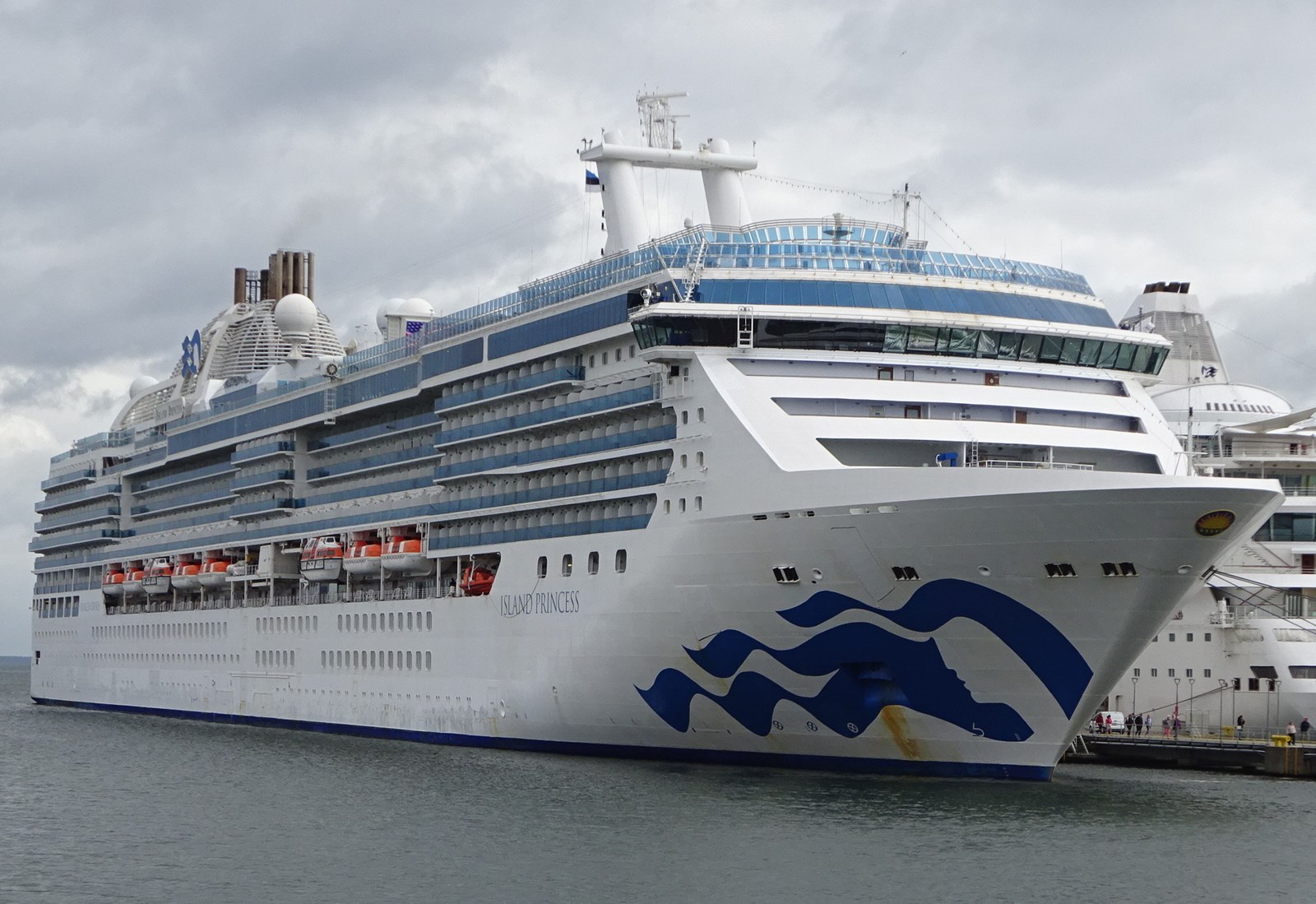
Island Princess is a Princess Cruises ship that entered service on 12 July 2003, built by Chantiers de l'Atlantique in Saint-Nazaire, France. She is one of only two ships built to her design — she and her sister Coral Princess form the Coral class — and together they occupy a distinctive place in the Princess fleet: they were designed as Panamax ships, sized to transit the original locks of the Panama Canal, at a time when the rest of the industry was building ever larger post-Panamax hulls. That deliberate constraint shaped everything about her, from her dimensions to the destination-focused character of her career. She is also the second Princess ship to carry the Island Princess name.
Key specifications
The dataset records 92,822 GT, a length of 294.0 m and a beam of 38.0 m. Published sources differ in instructive ways. Her as-built tonnage is commonly given as 91,627 GT, with the higher figure in the dataset consistent with a later re-measurement after capacity was added in a 2015 refit. The 38.0 m beam also needs care: the hull's waterline beam is about 32 m, which is what makes her Panamax, while the wider figure reflects the bridge wings, published at about 37 m. The dataset gives no capacity or crew figure; published sources give about 2,214 passengers at double occupancy after the 2015 work increased berths, and a crew of about 900. Her machinery is unusual for a cruise ship: a combined diesel-electric and gas arrangement (CODLAG) using Wärtsilä diesel engines together with a General Electric LM2500+ gas turbine, driving two shafts. Her published service speed is about 21 knots.
Design and construction
The Coral-class design was an exercise in doing more within a fixed box. The Panama Canal's original locks set the maximum hull width, so the designers concentrated on space and viewing area rather than sheer size: a high proportion of outside and balcony cabins for a ship of her era, and public rooms oriented outward. The gas-turbine element of the machinery was part of the same philosophy — the LM2500+ installation gave the class a distinctive engineering profile among early-2000s cruise ships, most of which were straightforward diesel-electric designs. The ship was ordered in 1999, laid down in 2001 and completed on 18 June 2003. Construction cost was reported at about US$330 million.
Naming, launch and maiden voyage
The dataset lists her launch year as 2003, but the launch itself — the float-out at Saint-Nazaire — took place on 2 July 2002; 2003 is the year of completion and entry into service. She was christened on 11 July 2003 and began her maiden voyage the following day, 12 July 2003, the date recorded in the dataset. The name continued a Princess tradition: an earlier Island Princess, a much smaller ship, had been one of the vessels associated with the line's early fame, and reusing the name on a new Panamax flagship was a deliberate link to that heritage.
Career by operator
Island Princess has carried one name for one operator throughout her career.
| Name | Operator | Period |
|---|---|---|
| Island Princess | Princess Cruises | 2003–present |
Her career pattern, rather than her ownership, is what distinguishes her. Because she can transit the Panama Canal's original locks and is smaller than Princess's later classes, she has been used on the line's more destination-intensive, longer itineraries — the kind of deployment for which the Coral class was designed. This directory does not track itineraries, which change seasonally; the structural point is that a Panamax hull built in 2003 retains routing options that larger fleetmates do not, and that has kept both Coral-class ships in front-line service long after many contemporaries were sold on.
Onboard character
The Coral class's era-defining feature is not a single attraction but a layout philosophy: a traditional, outward-looking cruise ship designed around viewing the places she visits. Contemporary descriptions of the class emphasise the bow-positioned casual dining venue with views over the water ahead — an unusual placement made possible by the design — the two-level main dining arrangement, and specialty venues including an Italian restaurant (Sabatini's) and a New Orleans-themed steakhouse (the Bayou Cafe & Steakhouse) that became class signatures. The overall character, repeatedly noted by reviewers of both sisters, is quieter and more intimate than Princess's larger Grand- and Royal-class ships: fewer headline attractions, more deck space per passenger devoted to watching the sea and the shore go by. That is precisely what a Panamax ship built for scenic, port-rich cruising was supposed to feel like, and it is why the pair developed a loyal following out of proportion to their size.
Major refits and incidents
The most consequential event in the ship's physical life was her 2015 refit, in which additional passenger berths were installed, raising her double-occupancy capacity above her sister's as-built figure and explaining the tonnage discrepancy noted above. Published fleet coverage also records a further refresh of the Coral-class pair in 2024. No major casualty — no fire, grounding or collision of record — attaches to Island Princess in the sources consulted for this guide. Where a ship has no major incident history, this directory says so plainly rather than padding the section.
Sister ships and class
The Coral class consists of exactly two ships: Coral Princess, the lead ship, which entered service in 2002, and Island Princess, which followed in 2003. Both were built by Chantiers de l'Atlantique, both are Panamax, and both share the class's diesel-electric and gas-turbine machinery arrangement. They are the only Panamax ships in the modern Princess fleet. The dataset leaves the class field blank for this ship; the Coral-class attribution comes from the ship's own published record. No further ships were ordered to the design — Princess's subsequent classes (Grand, Royal and Sphere) were all larger — which makes the pair a self-contained experiment in restraint at the peak of the industry's size race.
Fate and where she is now
The dataset records Island Princess as active and operating for Princess Cruises, and published fleet listings agree: she remains in service with her original operator, under her original name, more than two decades after her maiden voyage. For a ship launched into a fleet that has since added several much larger classes, that longevity is the story. Panamax dimensions, a destination-focused design and a loyal passenger base have kept her employed on the kind of cruising she was built for. No sale, renaming or retirement has been announced in the sources consulted, and this directory records her simply as she is documented: active, original name, original line.
Sources: https://en.wikipedia.org/wiki/List_of_cruise_ships, https://en.wikipedia.org/wiki/Island_Princess_(2002), https://en.wikipedia.org/wiki/Princess_Cruises